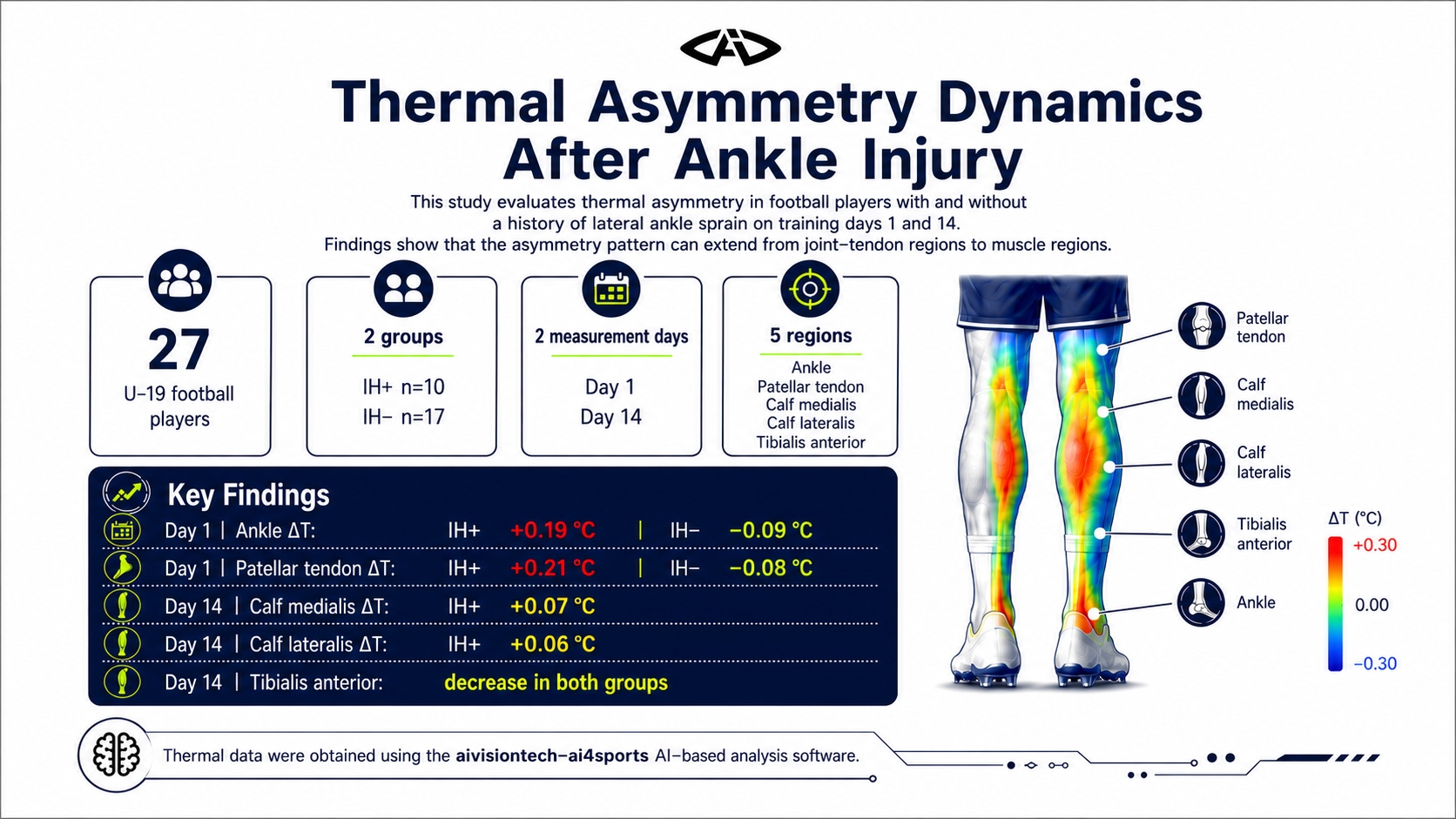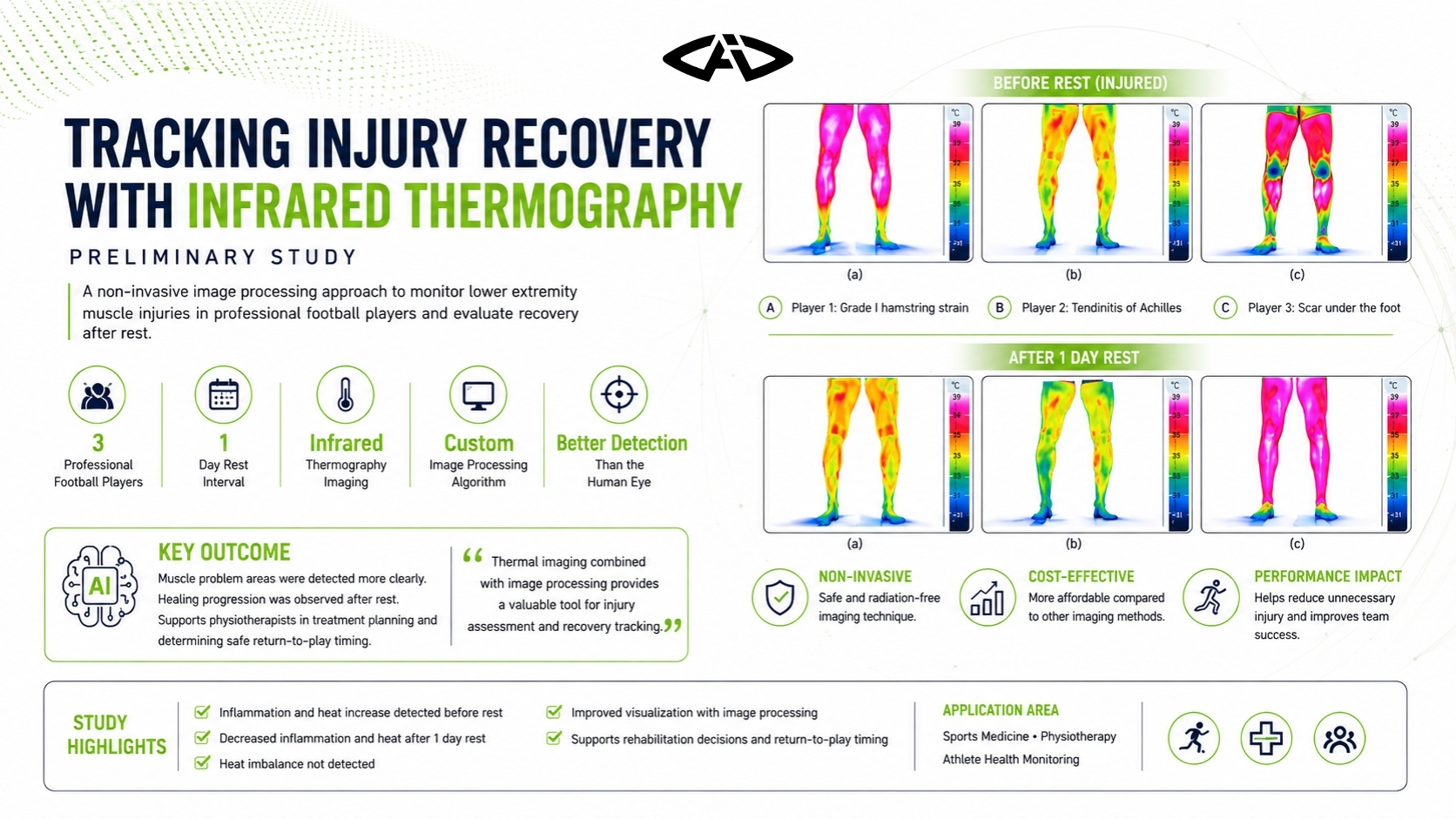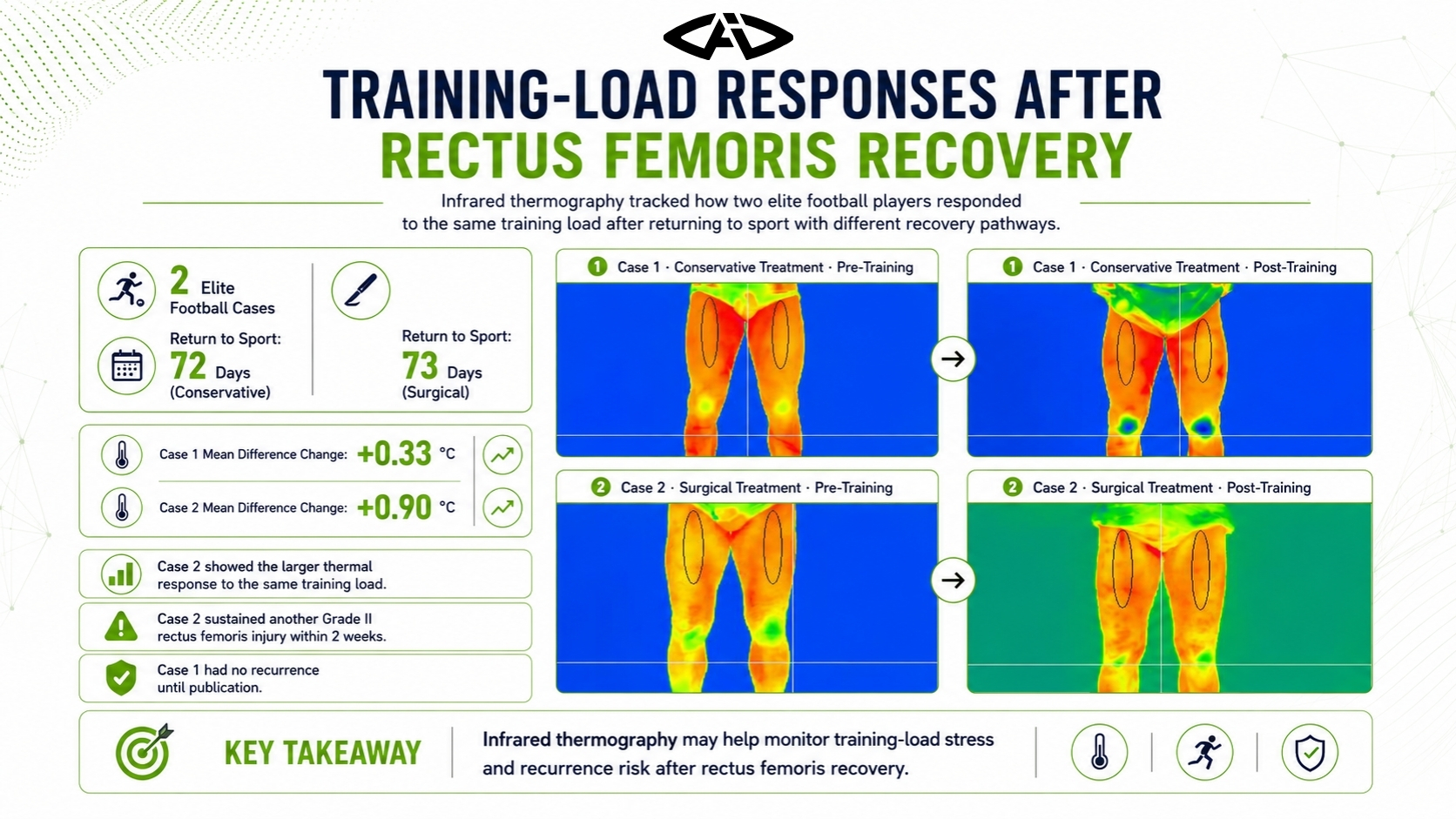



Sports medicine employs various methods and imaging techniques to treat athletes' injuries, monitor their training, and ensure their recovery processes. Thermography has gained popularity in recent years as an imaging method for examining sports injuries. This study evaluates the performance of U-Net, PSPNet, Linknet, and FPN deep learning models using lower extremity thermal images of professional soccer players.
Dataset and Method:
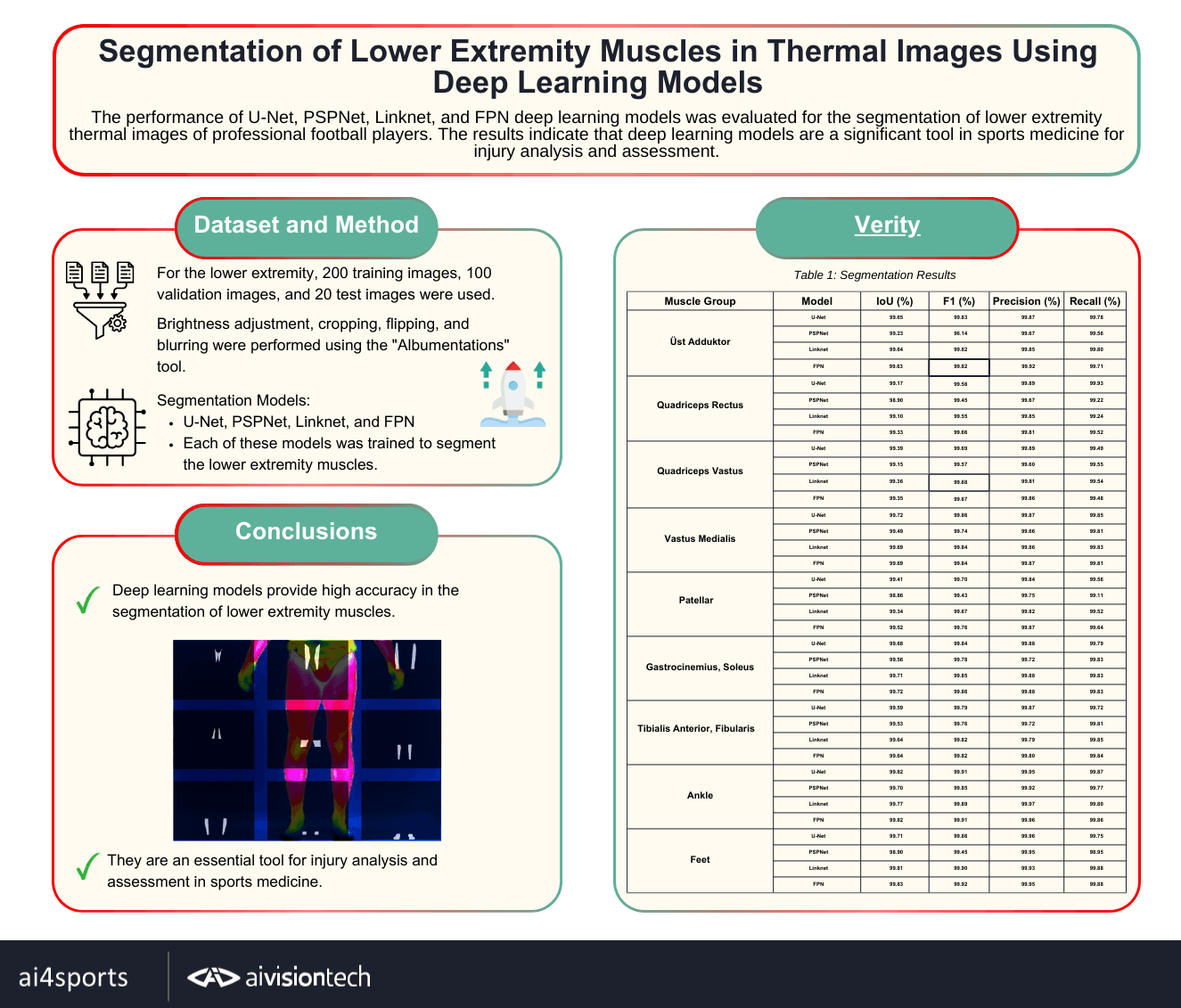
The study used lower extremity thermal images taken from professional soccer players in the Turkish Super League. Nine different muscle groups were identified and labeled. The dataset consisted of 200 images for training, 100 images for validation, and 20 images for testing. The images were 448×336 pixels in size, and data augmentation was performed using the "Albumentations" tool.
Segmentation Models:
U-Net, PSPNet, Linknet, and FPN models were used for segmentation. U-Net is a convolutional neural network widely used for medical image segmentation. PSPNet is designed to accurately classify and segment objects at different scales. Linknet is developed for fast and precise segmentation results. FPN is a model used to effectively detect and classify objects at different scales.
Findings:
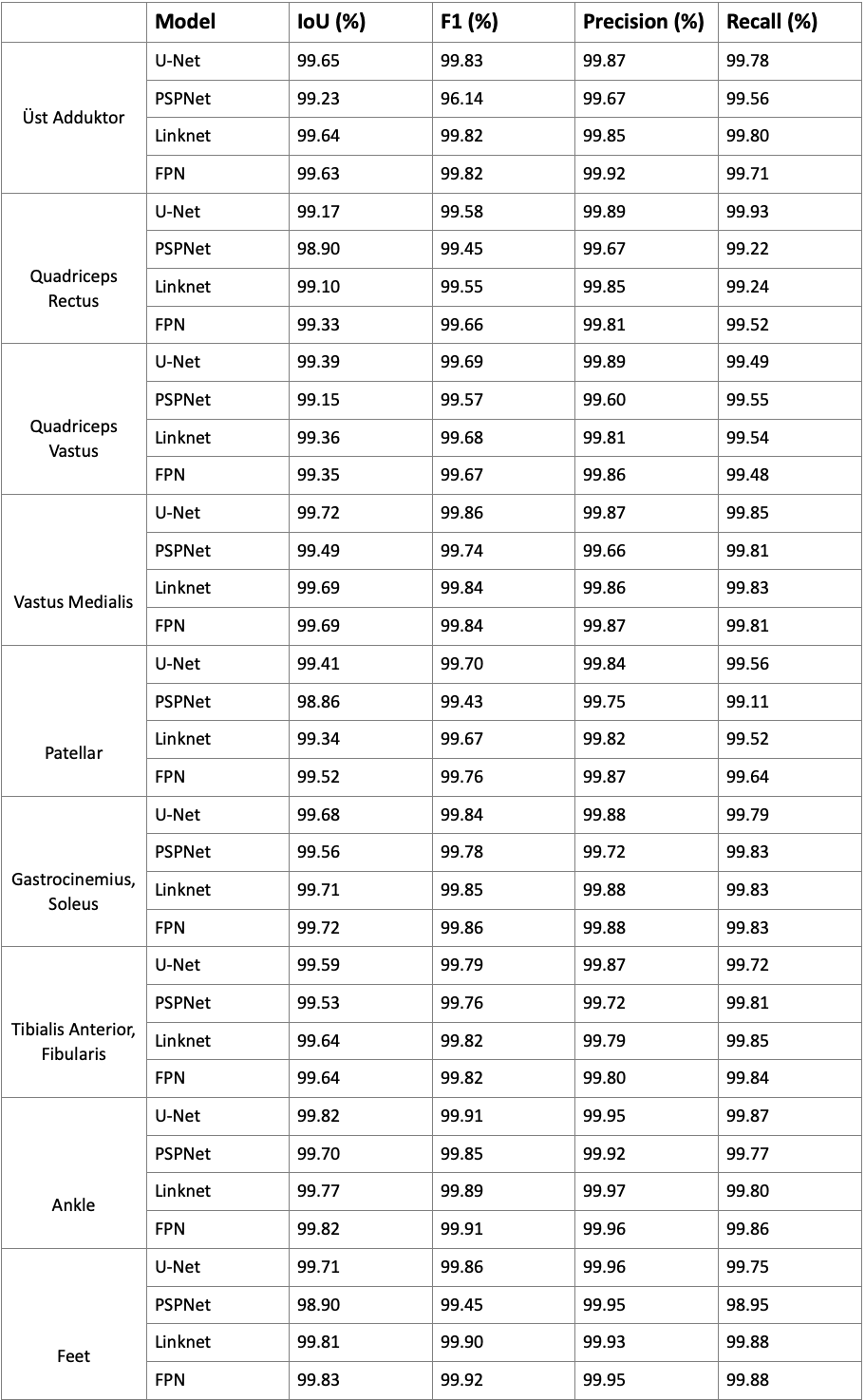
In this study, the performance of each model was evaluated for 9 different muscle groups. Here are the findings:
Conclusion:
This study demonstrates that deep learning models can successfully segment lower extremity muscles in thermal images. U-Net and FPN models provided the highest accuracy in segmentation tasks. These models can be used as significant tools in sports medicine for injury analysis and assessment.